 info@example.com
 Rock Street, San Francisco


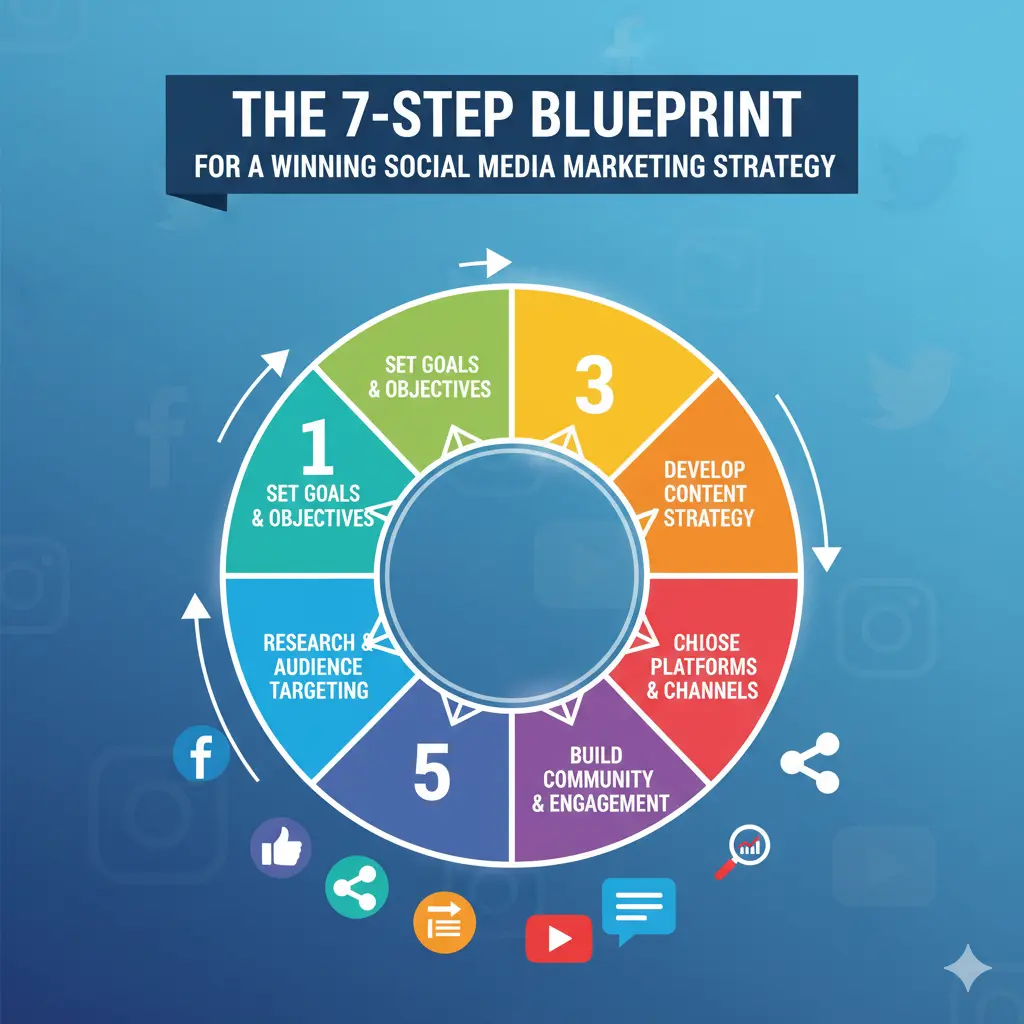
Social Media Marketing (SMM) is more than just posting pictures; it’s a powerful engine for brand growth, lead generation, and customer loyalty. But without a clear plan, your efforts are just noise. This guide provides a definitive, 7-step blueprint to build a winning Social Media Marketing Strategy that delivers measurable results.
Step 1: Define Your SMART Goals
Before you post a single piece of content, you need to know what success looks like. Your goals must be SMART:
- Specific: Instead of “get more followers,” try “Increase Instagram followers by 20%.”
- Measurable: Use metrics like follower growth, engagement rate, or website traffic.
- Achievable: Set realistic targets based on your current performance and resources.
- Relevant: The goals must align with your broader business objectives (e.g., if your business needs leads, your SMM goal should be lead generation, not just likes).
- Time-bound: Set a deadline (e.g., “by the end of Q4”).
Pro Tip: Align your social goals with the sales funnel: Awareness (Reach, Impressions), Consideration (Engagement, Clicks), and Conversion (Leads, Sales).
Step 2: Know Your Audience (Deeply)
You can’t talk to everyone, so don’t try. A strong Social Media Marketing Strategy requires a deep understanding of your target audience.
- Create detailed buyer personas: What are their demographics (age, location, income)? What are their psychographics (interests, values, pain points)?
- Identify their preferred platforms: Is your audience on TikTok, LinkedIn, or Facebook? Focus your efforts where they spend their time.
- Analyze their behavior: What kind of content do they engage with most? When are they online?
Step 3: Conduct a Competitive Analysis
Your competitors can be your best teachers. Audit their social presence to find both opportunities and gaps.
- What are they doing well? Note their top-performing content and successful campaigns.
- What platforms are they ignoring? This could be your low-competition entry point.
- What is their content mix and posting frequency? This helps you set a realistic benchmark for your own efforts.
Step 4: Develop Your Core Content Pillars
A content pillar is a theme or topic that your brand consistently creates content around. This ensures your posts are always relevant to your audience and aligned with your brand voice.
| Pillar Example | Content Type | SMM Goal |
| Educational | “How-To” guides, industry tips, Q&A sessions. | Establish authority & trust. |
| Entertaining | Memes, behind-the-scenes glimpses, trending challenges. | Drive engagement & shareability. |
| Promotional | Product features, special offers, customer testimonials. | Drive conversions & sales. |
Step 5: Create a Content Calendar
Consistency is the single most important factor for success on social media. A content calendar maps out what you’ll post, where, and when.
- Platform-Specific Content: Tailor content for each channel (e.g., short-form video for Instagram Reels/TikTok, professional articles for LinkedIn).
- Scheduling: Use a social media management tool to schedule posts in advance for optimal timing.
- Allocate Resources: Know who is responsible for content creation (copy, design, video).
Step 6: Engage and Build Community
Social media is a two-way street. Your strategy must prioritize interaction over just broadcasting messages.
- Respond Quickly: Reply to comments and direct messages promptly. This improves customer service and brand perception.
- Foster User-Generated Content (UGC): Encourage followers to share their experiences with your product/service. UGC is authentic and highly effective.
- Run Polls and Q&As: Use platform features (like Instagram Stories or LinkedIn Polls) to directly involve your audience.
Step 7: Measure, Analyze, and Refine (Tracking ROI)
The final, and most crucial, step in any Social Media Marketing Strategy is proving its value. Use built-in platform analytics and tools like Google Analytics to track your Key Performance Indicators (KPIs).
- Key Metrics to Monitor:
- Reach & Impressions: How many people saw your content?
- Engagement Rate: Are people liking, sharing, and commenting?
- Click-Through Rate (CTR): Are posts driving traffic back to your website?
- Conversion Rate: Did your SMM efforts lead to sign-ups, downloads, or sales?
Use this data to analyze what worked and what didn’t. Don’t be afraid to scrap underperforming content types or adjust your posting schedule. Social media is constantly evolving, and your strategy should be too!

Leave a Reply